
Granular Intelligence for Global Logistics.
Bosphorus Data Nexus transforms fragmented maritime trade signals into a cohesive decision-making framework. We provide the technical depth required to navigate shifting global trade lanes with precision.

Global Operations | Istanbul Hub
The Raw Signal
Data begins with the fusion of high-frequency AIS transmissions and official port statistics. We synthesize satellite vessel tracking with terminal-level throughput reports to identify discrepancies that standard aggregators miss. This involves cleaning millions of noise-heavy packets to extract true arrival, departure, and dwell times across 450+ global terminals.
Every vessel movement is cross-referenced against bill of lading records and manifested weights to ensure shipping analytics reflect physical reality, not just electronic pings.
The Refined Insight
Our proprietary algorithms translate these signals into predictive maritime trade patterns. By analyzing historical congestion cycles and commodity-specific transit times, we provide clients with lead-indicator reports. These are not just summaries; they are forward-looking assessments of supply chain resilience and port efficiency.
- Dynamic Route Optimization Models
- Regional Port Activity Indices
- Critical Bottleneck Forecasts
Standardized Trade Metrics
We provide structured shipping analytics across five core dimensions, enabling apples-to-apples comparisons of port performance globally.
Vessel Utilization
Analysis of deadweight tonnage (DWT) vs. actual draft readings to determine load factors and hub efficiency.
Port Dwell Dynamics
Granular breakdown of time spent at anchor versus time spent at berth, identifying specific labor or terminal delays.
Commodity Flow Maps
Tracing specific dry bulk and containerized cargo from origin to final port of discharge via manifest tracking.
Bunker Fuel Analysis
Correlating vessel speeds with fuel consumption estimates to assess environmental impact and cost efficiency.
Trade Lane Volatility
Monitoring seasonal fluctuations and geopolitical impacts on major corridors like the Suez or Panama Canal.
Compliance Screening
Automated detection of dark ship maneuvers, transshipment anomalies, and sanction-related risks.
Insight into the
Physical Flow.
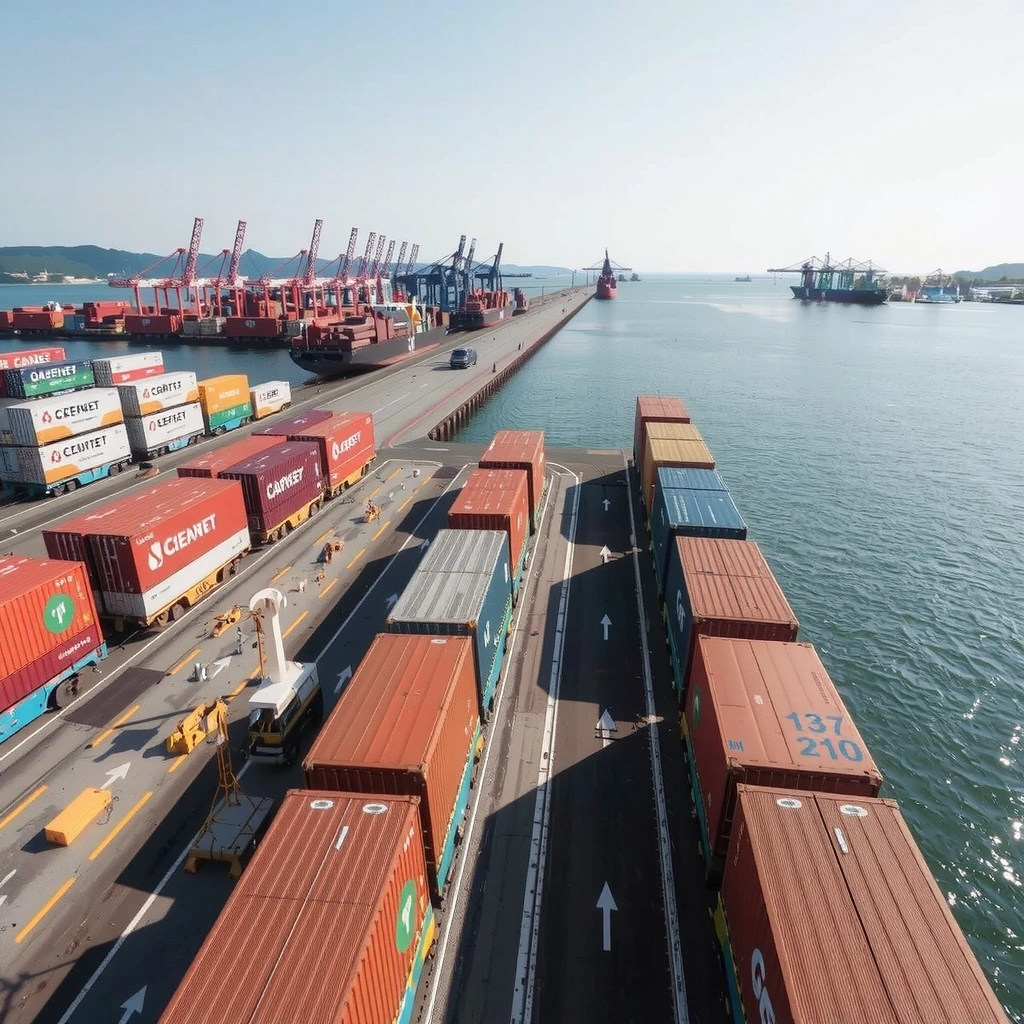
Our reports aren't generated in a vacuum. We deploy physical trade intelligence that considers the real-world constraints of maritime transit—weather patterns, labor strikes, and infrastructure limitations.
Whether you are a logistics provider optimizing a fleet or an analyst tracking maritime trade volume, the Bosphorus Data Nexus platform provides the high-fidelity resolution required for complex risk management.

Transit Monitoring
Terminal Velocity

Data Integrity
The Validation Engine
Accuracy Standards
Transparency in shipping analytics is only possible when the underlying methodology is reproducible. We utilize a triple-check system:
Direct Port Feeds
Live API connections to major port authorities and harbor masters.
Vessel Telemetry
Dual-source AIS verification to eliminate "ghost ship" spoofing.
Historical Benchmark
Deviation analysis against 10-year rolling averages per port.
Signal Confidence Index
*Values based on internal Q1 2026 data validation protocols across 28 key maritime hubs.
Scale Your Intelligence Capability
Whether you need a one-time trade lane analysis or a continuous data stream, our team in Istanbul is ready to configure your custom portal.